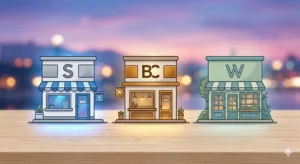
Finding the Right Fit Beyond Shopify
For years, Shopify has been the go-to recommendation for anyone wanting to sell online. It is powerful, reliable, and has an app for almost everything. However, as we move through 2026, many small business owners are finding that the “default” choice isn’t always the best one for their specific journey.
Maybe you find the monthly app subscriptions are eating into your margins, or perhaps you want more creative freedom than Shopify’s structured themes allow. Whatever your reason, the market for e-commerce platforms has never been more diverse or beginner-friendly.
At hostdev.me, we believe in finding tools that match your pace. In this guide, we will walk through the top contenders that offer a different path to success, focusing on ease of use, cost-effectiveness, and modern features like AI-assisted design.
1. Wix: The King of Creative Freedom
Wix has evolved from a simple website builder into a robust e-commerce powerhouse. It is particularly well-suited for businesses where the “vibe” of the brand is just as important as the products themselves. If you want to drag an image exactly three pixels to the left, Wix lets you do that.
In 2026, Wix’s AI features have become incredibly intuitive. For example, a local jewelry maker can describe their brand aesthetic to the Wix AI assistant, and it will generate a complete, high-converting storefront with matching product descriptions in minutes.
Practical Example: A boutique plant shop using Wix can easily integrate a blog with large, beautiful galleries and a booking system for in-person potting workshops—all under one roof without needing complex third-party apps.
2. WooCommerce: The Path to Total Ownership
If you are a fan of WordPress or simply hate the idea of a platform “owning” your store data, WooCommerce is your best bet. Because it is open-source, you have 100% control over your files, your hosting, and your future. There are no platform transaction fees, which is a huge win for thin-margin businesses.
The trade-off here is a slightly steeper learning curve. You are responsible for your own security updates and hosting. However, for a small business that wants to grow without hitting a “glass ceiling” of platform limitations, the effort is well worth it.
Practical Example: An independent bookstore can use WooCommerce to create a deeply customized search filter for thousands of titles, something that might require an expensive “Advanced” plan on other platforms.
3. BigCommerce: Scaling Without the App Headache
BigCommerce is often called the “Pro” alternative to Shopify. Its biggest selling point is that it includes many features natively that Shopify requires apps for. This means things like multi-currency selling and advanced SEO tools are ready to go the moment you sign up.
For a small business that plans to scale quickly, BigCommerce offers a smoother transition. You won’t wake up one day to find your site slowed down by twenty different third-party plugins clashing with each other.
Comparing the Top Contenders
| Platform | Best For | Key Pro | Key Con |
|---|---|---|---|
| Wix | Visual Brands | Total design freedom | Hard to switch themes later |
| WooCommerce | Tech-Savvy Owners | No platform fees | Requires manual maintenance |
| BigCommerce | Growth-Focused | Native advanced features | Higher starting complexity |
| Squarespace | Artists/Creators | Stunning templates | Limited deep e-commerce tools |
4. Squarespace: The Aesthetic Specialist
Squarespace remains the gold standard for design. If your products are highly visual—like photography prints, high-end fashion, or artisanal home goods—Squarespace makes them look like they belong in a museum. The interface is calm, minimalist, and very hard to “mess up.”
While it lacks the deep inventory management of BigCommerce, it is perfect for smaller catalogs. It is an all-in-one solution, meaning your domain, hosting, and 24/7 support are handled by one team, giving you more time to focus on your craft.
5. Square Online: Perfect for Hybrid Retail
Do you sell at farmer’s markets or have a small physical pop-up shop? Square Online (formerly Weebly) is built to sync your physical sales with your digital ones perfectly. If you sell a candle in person, your online stock levels update automatically in real-time.
Their free tier is surprisingly generous, allowing you to start selling online with very little financial risk. It is a grounded, practical choice for the “bricks and clicks” small business owner who needs reliability over flashy features.
How to Choose Your Platform
Choosing an alternative isn’t just about price; it’s about your daily workflow. Ask yourself: how much time do I want to spend on the technical side? If the answer is “none,” lean toward Wix or Squarespace. If you want to be the architect of your digital empire, go with WooCommerce.
Remember that most of these platforms offer a 14-day trial. At hostdev.me, we always recommend building a “test product” on two different platforms to see which dashboard feels more intuitive to you before you commit your domain name.
The year 2026 is all about choosing tools that serve your business, rather than you serving your tools. By stepping away from the crowd, you might just find the perfect home for your small business to thrive.